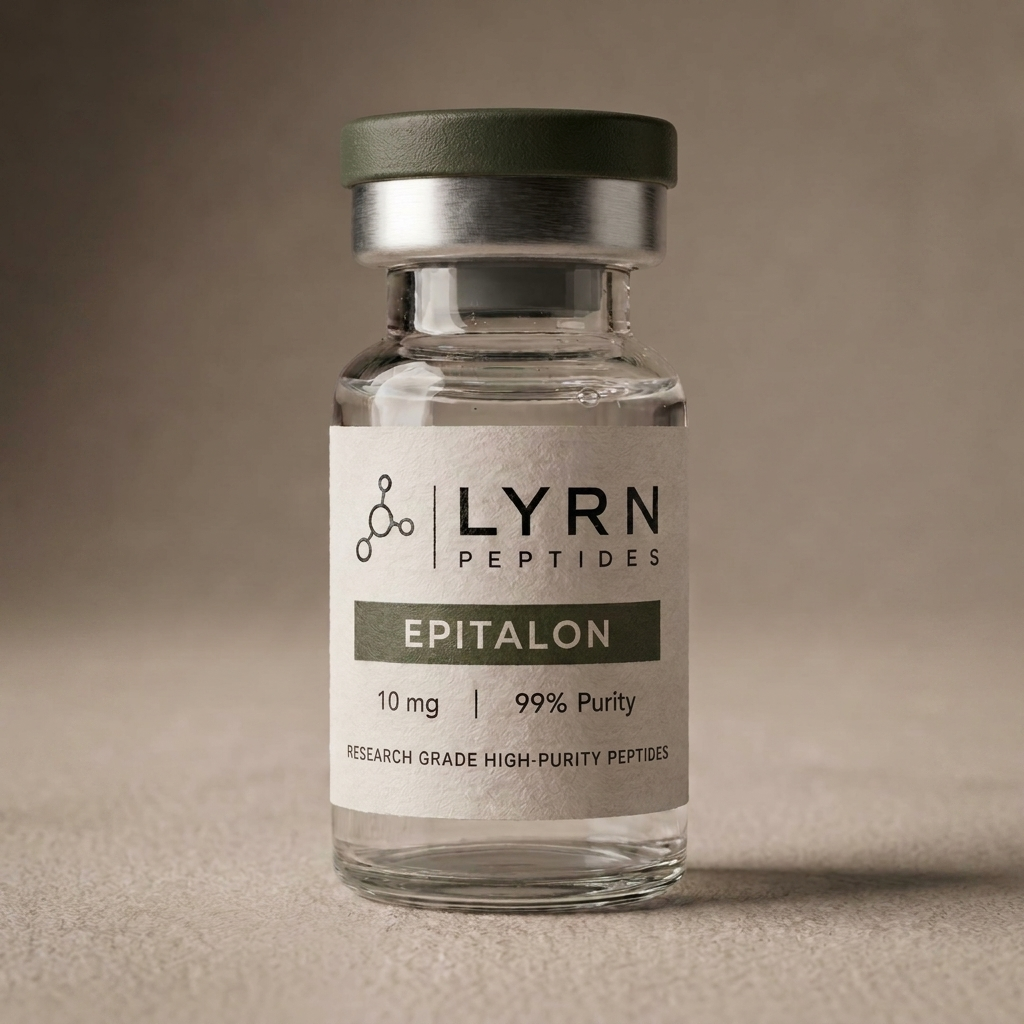
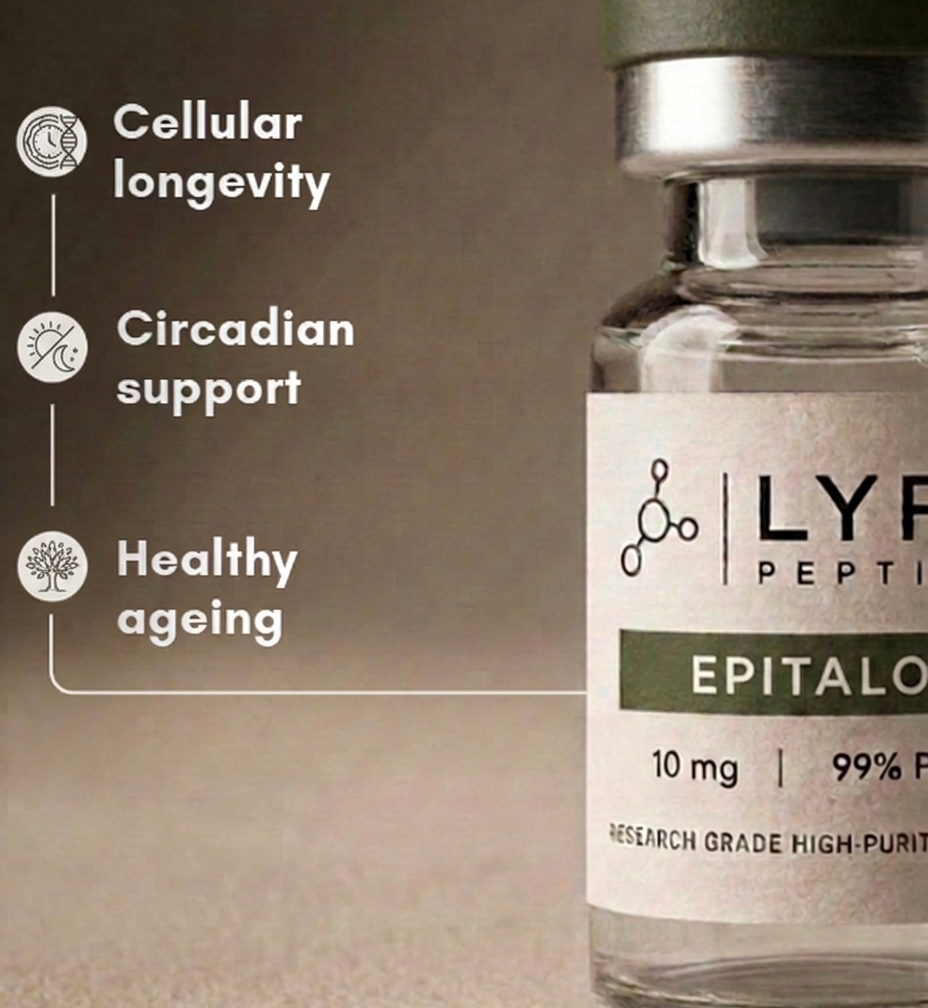
Epitalon is a tetrapeptide developed from compounds associated with the pineal gland. Its research profile is linked to telomerase, telomeres, melatonin production, circadian rhythm and processes associated with cellular ageing. Within LYRN, it must be positioned as an advanced longevity product rather than a rapid cosmetic solution. The communication should remain measured and transparent about the limited nature of large-scale human evidence.
Epitalon—also spelled Epithalon—is a synthetic tetrapeptide derived from epithalamin and developed through Russian longevity research. It is associated with the pineal gland, telomerase, melatonin, and circadian rhythms. It is an advanced longevity product, not an immediate aesthetic solution.
Telomeres are protective structures located at the ends of chromosomes. They shorten with cell division, and this shortening serves as one of several markers of cellular aging. Maintaining telomeres does not, in itself, equate to halting aging.
Epitalon was developed from compounds associated with the pineal gland. Research links it to the regulation of melatonin and biological rhythms, particularly in aging organisms. This connection underpins its positioning regarding circadian function and longevity.
The materials describe the normalization of circadian rhythms and support for melatonin production, based primarily on Russian research. It can be part of a sleep and longevity strategy. It does not replace light exposure, consistent schedules, or sleep hygiene.
It may support processes associated with telomerase, melatonin, antioxidant defense, the cell cycle, and immune function.
These are research-based benefits and should not be interpreted as promises to extend lifespan. Its value lies in a long-term strategy with realistic expectations.
That is not how it is positioned. Unlike an aesthetic product, it targets cellular and circadian processes that are not immediately perceptible. Choosing it in the hope of a rapid change in the skin or body would create a misconception.
GHK-Cu focuses on collagen, skin, and tissue remodeling. Epitalon is linked to telomerase, the pineal gland, and circadian rhythms. Together, they address two distinct levels of longevity: the visible and tissue-level on the one hand, and the cellular and circadian on the other.
Research spanning several decades exists, but much of it originates from Russia, animal models, cell cultures, and limited human studies. It lacks the same level of evidence as a drug approved through large-scale trials. Communication regarding it should acknowledge its potential without presenting definitive conclusions.
You will be kept up to date with all our latest news.