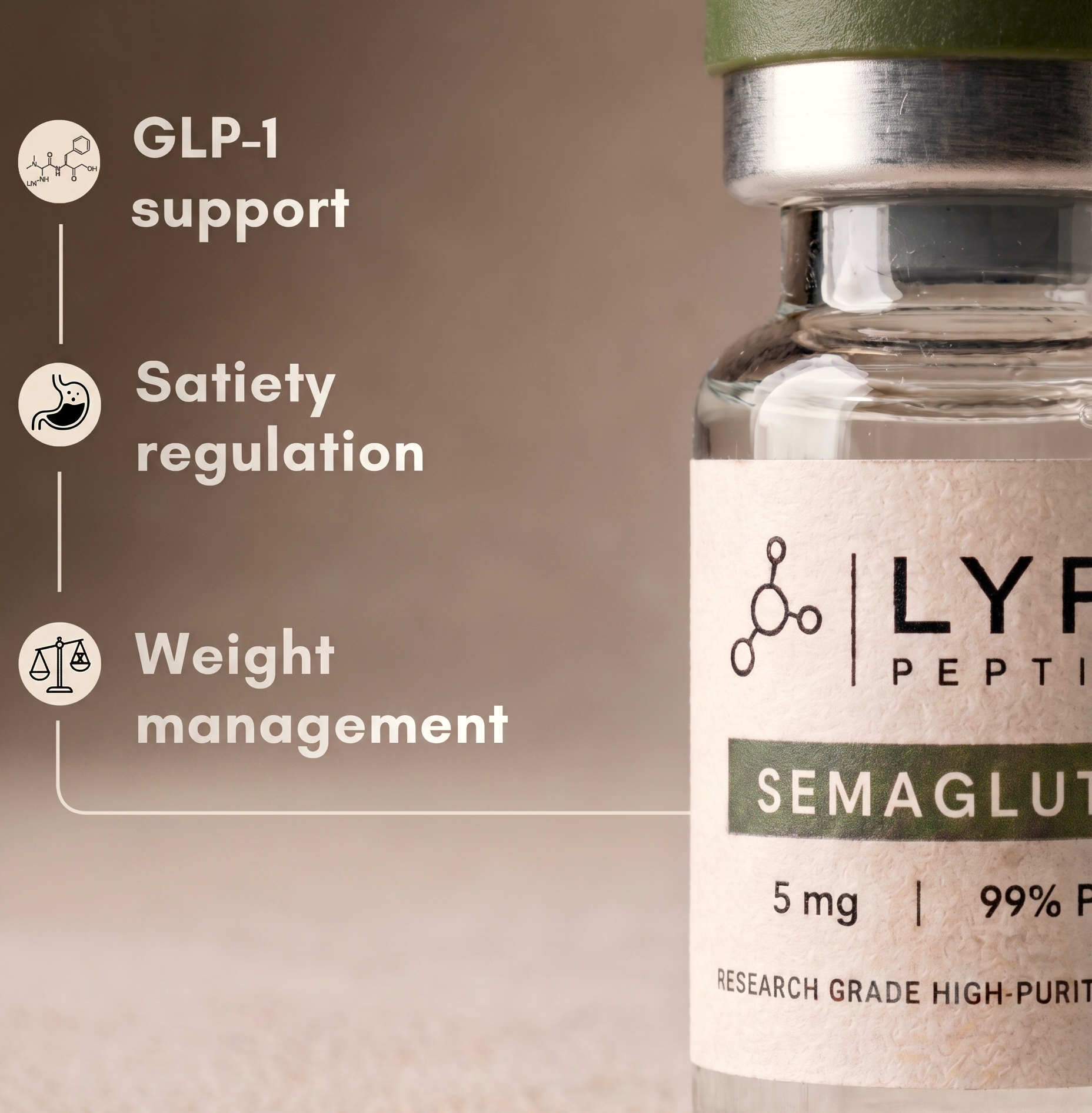
Semaglutide is a GLP-1 receptor agonist associated with appetite, satiety and the metabolic response to food. Within a structured programme, its primary role is to help users manage hunger and maintain a more sustainable energy intake. Popularity does not make it appropriate for everyone. Without adequate nutrition and resistance training, weight loss may include unnecessary loss of muscle, performance and functional capacity. The product page should lead with assessment and education, not purchase urgency.
Semaglutide is a GLP-1 receptor agonist peptide medication. It mimics an intestinal signal involved in satiety, the response to food, and glucose control. It belongs to a regulated pharmacological category and requires professional supervision; it is not a conventional wellness product.
Activating GLP-1 can increase the feeling of fullness and reduce hunger, facilitating lower food intake. This effect can improve adherence to a nutritional program. The reduction in appetite must still allow for sufficient protein, micronutrients, and energy to maintain health and function.
It should not be described as a direct fat burner. Its primary practical effect is helping to reduce intake by influencing hunger and satiety. Fat loss occurs when an appropriate energy balance is maintained, and it can be accompanied by muscle loss if the plan does not protect against it.
Losing weight means the total number goes down—a figure that can include fat, muscle, water, and digestive contents. Improving body composition means reducing fat while preserving as much muscle and function as possible. That second goal requires protein, strength training, and monitoring.
This requires sufficient protein and energy intake, strength training, appropriate progression, and control of the rate of weight loss. Monitoring recovery and performance is also important. The product facilitates adherence, but the muscle-protective system is built outside the vial.
Semaglutide acts primarily on GLP-1. Tirzepatide combines GLP-1 and GIP. This difference in pathways alters the profile, but it does not allow us to state that one is better for everyone.
This is because there are contraindications, interactions, gastrointestinal effects, and medical histories that must be reviewed.
It is also necessary to assess whether the goal can be achieved through a less complex intervention. Its status as a medication requires an appropriate clinical and regulatory framework.
If habits, a training routine, and a maintenance strategy have not been established, hunger and weight may increase again. The goal should be to leverage the support period to create a sustainable system. Decisions regarding discontinuation or continuation should be made in consultation with the supervising professional.
You will be kept up to date with all our latest news.