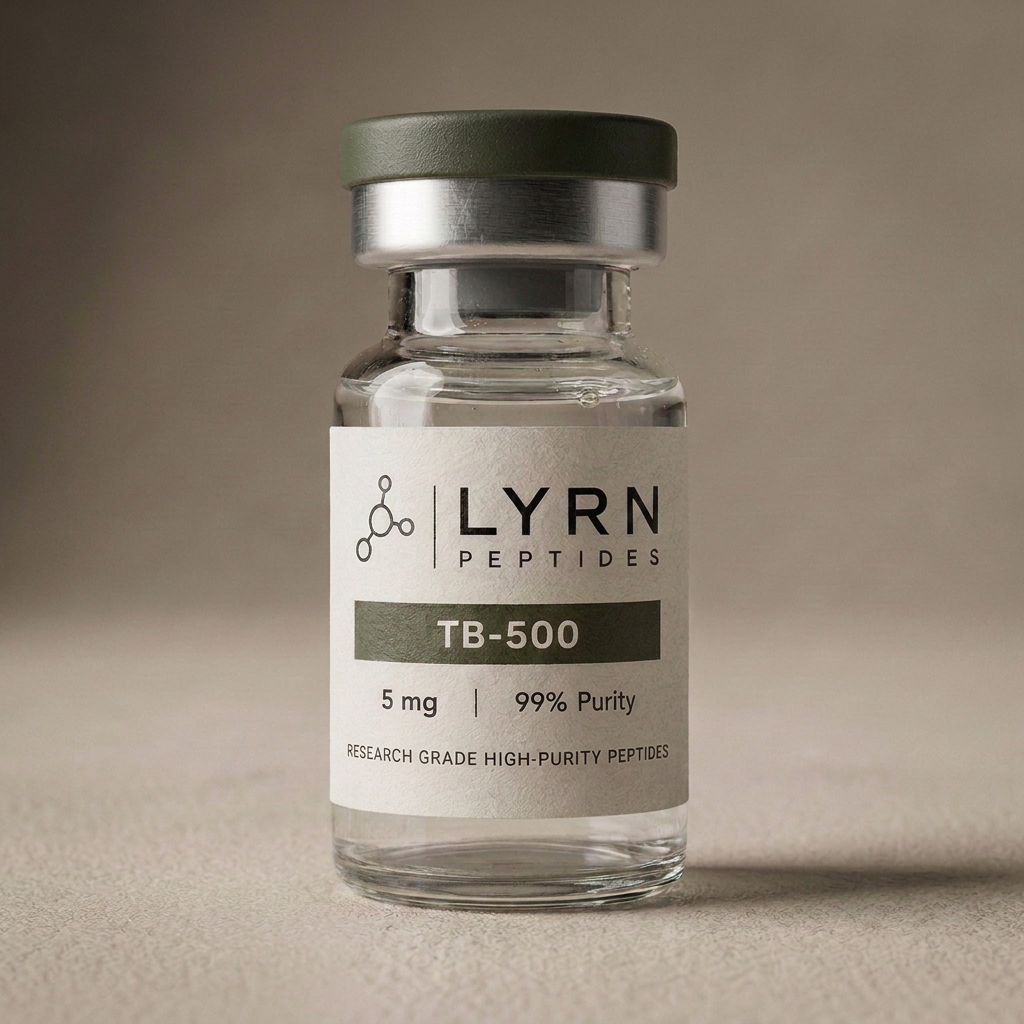
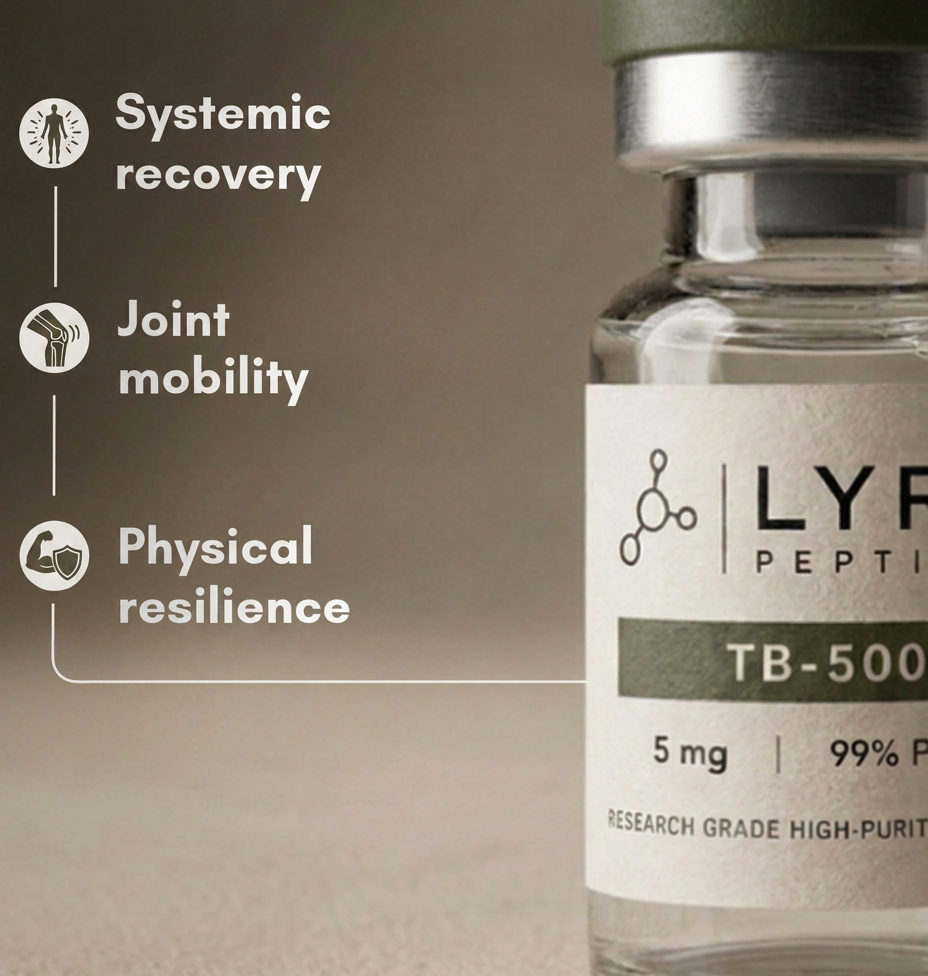
TB-500 is associated with the body’s natural recovery response, mobility and the resilience of soft tissues. Its catalogue position is broader and more systemic than a purely local recovery tool. It is commonly discussed in relation to cellular migration, flexibility and the way the body responds to physical stress. TB-500 can be selected alone when independent adjustment is required, but its best-known combination is with BPC-157.
TB-500 is a synthetic fragment related to Thymosin Beta-4, a protein found in numerous tissues. It is being studied for its role in actin dynamics, cell migration, blood vessel formation, and the inflammatory response. It is positioned as a tool to support general recovery and soft tissue health.
This is because its mechanism is not limited to a specific area; it involves cellular processes present in various tissues—such as migration, actin organization, and vascular response. For this reason, it is often described as offering broader support for mobility, flexibility, and recovery. However, this does not mean it works the same way for everyone, nor does it replace a professional assessment.
The materials link it to support for tendons, ligaments, muscles, and skin, as well as potential improvements in flexibility and a reduction in perceived stiffness. In online communications, it is appropriate to highlight support for mobility, recovery between sessions, and tissue resilience. Most of the evidence comes from animal models and veterinary use.
TB-500 is associated with actin, cell migration, and a more systemic response. BPC-157 is linked more closely to fibroblasts, nitric oxide, local protection, and gastrointestinal support. The difference is not that one is better, but rather that they provide distinct signals regarding a similar target.
It can be suitable when the primary goal is mobility, soft tissue health, and systemic recovery, especially for active individuals with accumulated wear and tear. However, stiffness can stem from excessive load, osteoarthritis, injury, lack of movement, or poor recovery. The product should not replace identifying the underlying cause.
It simply offers greater control when the TB-500 dosage needs to be adjusted independently. Combining it with BPC-157 addresses two complementary pathways and represents the gold-standard recovery formula in the guide. The right choice depends on whether you prioritize precision or the convenience of a fixed blend.
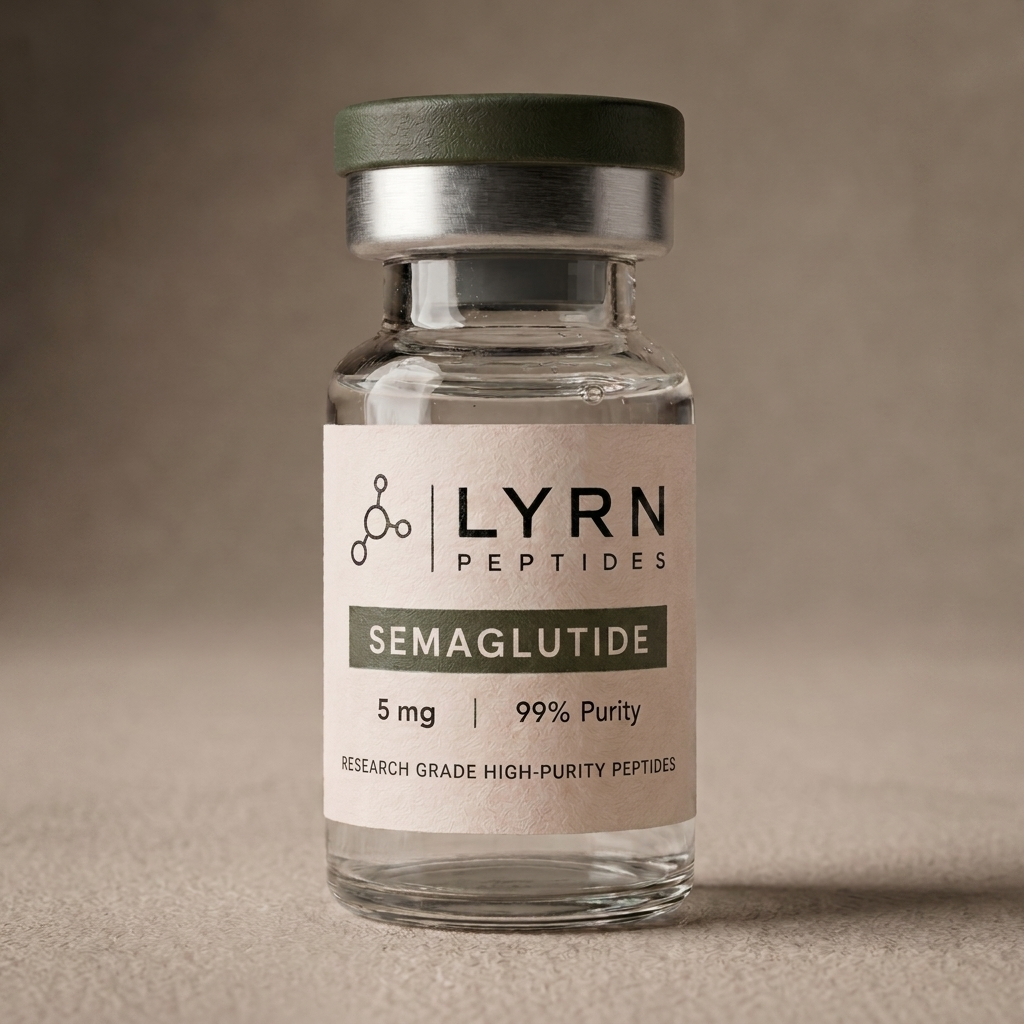
The 5 mg and 10 mg figures indicate the total amount of product contained in each vial, not a recommendation for use.
A larger presentation may offer a greater quantity or more flexibility, but it is not automatically the right choice.
The choice should depend on the objective, the protocol format, and individual assessment.
Because benefits depend on the suitability of the product, the plan, and the individual response—not on purchasing the highest number. A larger package offers a greater quantity, but it may also be unnecessary for the goal. The criterion should be choosing the right amount, not maximizing milligrams.
You will be kept up to date with all our latest news.