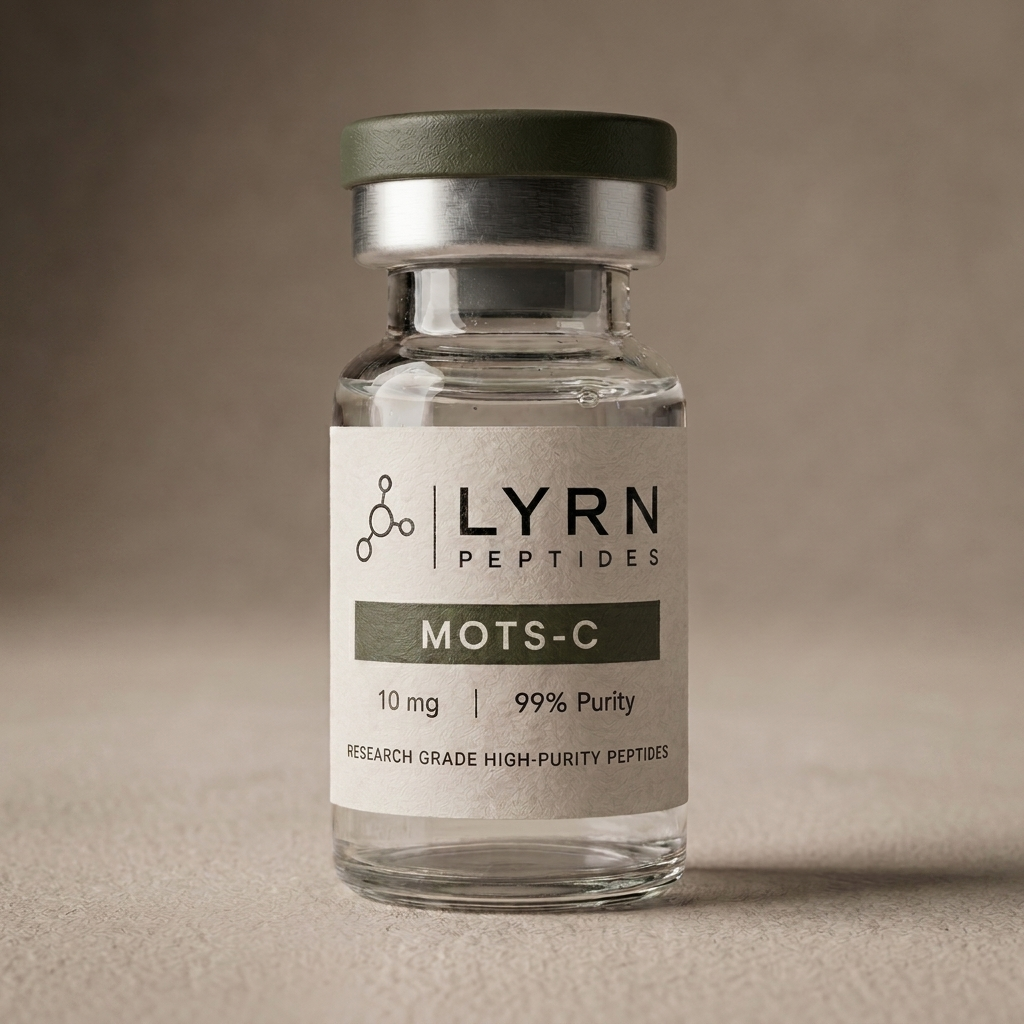
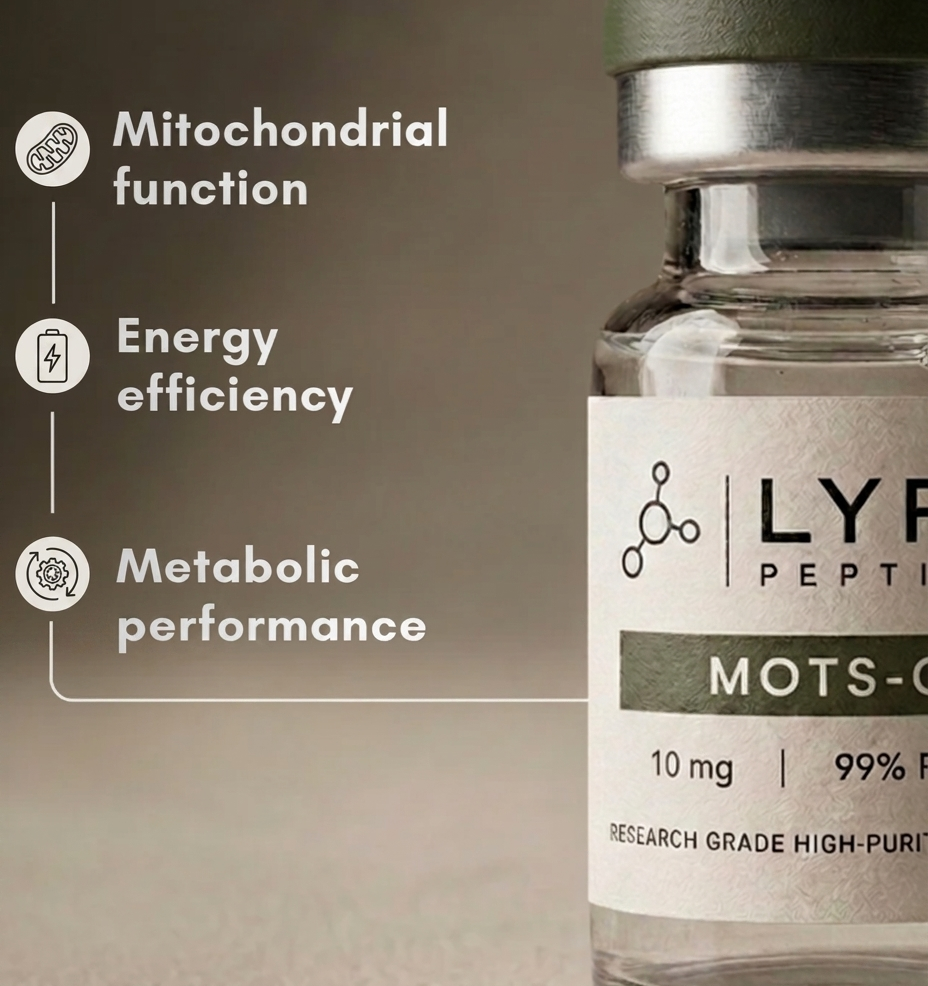
MOTS-c is a mitochondrial-derived microprotein associated with the way the body manages glucose, fatty acids and cellular energy. Unlike GH secretagogues, its main catalogue story is not pituitary or hormonal signalling. It is positioned around metabolic efficiency, AMPK-related signalling, physical performance and healthy metabolic ageing. It should not be marketed as an immediate stimulant or automatic fat-loss product.
MOTS-c is a microprotein encoded by mitochondrial DNA. It was discovered as a signal that helps coordinate metabolism and the cellular response to stress. Its mitochondrial origin distinguishes it from GH secretagogues and products that affect appetite.
It is being studied for its ability to activate AMPK and support the utilization of glucose and fatty acids. This may promote metabolic efficiency, exercise adaptation, and cellular energy. One should not promise an immediate sensation of energy, as its mechanism of action is not that of a stimulant.
Preclinical research links it to performance, metabolic sensitivity, and body composition. It may make sense for advanced users seeking energy efficiency and improved adaptation. Evidence in humans is still limited and should be communicated with caution.
MOTS-c is associated with AMPK, a pathway that helps cells respond when they need energy. From there, it can influence glucose and fatty acid utilization. Its role is regulatory and metabolic, rather than a direct fat-burning effect.
No. It does not work like caffeine, nor should it be sold based on a sensation of immediate stimulation. Its positioning focuses on mitochondrial efficiency and metabolism. If persistent fatigue is present, one must first investigate sleep, nutrition, stress, and health.
MOTS-c operates via mitochondrial signaling and AMPK. Tesamorelin acts on GHRH and GH release. Both can influence body composition, but they do so through completely different systems.
MOTS-c is primarily associated with metabolic regulation and fuel utilization. SS-31 targets cardiolipin and the structural protection of the mitochondrial membrane. One acts as a metabolic signal, while the other serves as a more structural form of mitochondrial support.
For athletes, longevity enthusiasts, and individuals aiming for advanced metabolic efficiency who already have the fundamentals in place. It is not a starting point for someone who sleeps poorly, does not train, or is solely looking to lose weight quickly.
You will be kept up to date with all our latest news.